Search This Blog

Wednesday, November 30, 2011

Post- Site Visit


Survival
* Where is your internship?
Downtown on Newton St. 6 blocks south of Petco Park

* How did you get there?
I drove

* How long did it take?
15 minutes

* What did you eat for breakfast?
Scrambled eggs. Protein enriched, good meal.

* What food, coffee, or other survival options are nearby?
They work with a restaurant connected to my building, The Blueprint Cafe. Also there is a refrigerator with snacks that I am welcome to take from.

* What can you eat for lunch in a normal day at internship?
Anything my heart desires.

* Where will you sit, stand, be, or work when you are internship?
I will have a desk but mainly I will be walking around working on drafts with my co-workers.

* Where are the bathrooms?
first door on the right... 

People
* Who is your mentor and what is he or she like?
My mentor, Mark Steele, is a great guy. He has had his company since 1983 and loves the mixture of design, problem solving, and geometry (which he excelled in throughout high school and college).

* What stands out most or seems most interesting about your mentor?
He is very non-orthodox in his line of work. His workers come in and out throughout the day, and that is the style that he welcomes.

* Who are your other coworkers?
I have 9 others of whom 4 were there at the time. one of them, Brett, is on the Olympic rowing team, which I was interested because I row.

* What stands out most or seems most interesting about your future coworkers?
They are all extremely friendly and willing to help me.


Work
* What is your internship project likely to be?
Making a 3D model of a home that is in the planning stage right now.

* What skills will you use at your internship?
problem solving, collaborative, patience, listening.

* What are you likely to learn at internship?
Usually what I hope to learn and what I actually learn are two totally different things, so I will not make any assumptions.

* What will you create at your internship?
Hopefully a 3D model.

Thoughts
* What might present a challenge at internship?
Because I have no prior experience with blueprints or Indesign or any other programs that they use, I will most likely be challenged.

* What is surprising about your internship?
The layed back attitude around the office.

* How will you stand out at your internship?
I will be a new set of eyes for my coworkers. I will inspire new ideas in the office.

* What will you do to make the most of this opportunity?
Ask good questions and listen.

And...
* What do I expect to gain out of this experience?
I expect to learn what an architect does on a day to day basis. I expect to create something beyond my expectations and my mentor's expectations. 

Tuesday, November 29, 2011

Pre-internship Visit

          I am excited about learning a couple things for my internship. One being how an architecture firm operates from the inside. I am looking forward to going to sites (hopefully) to see the process of building a structure step by step. I am looking forward to working with individuals who are experts at their specific job and being able to learn from them. I am concerned for my lack of knowledge of architecture.I plan to add a new perspective into the workplace, a fresh set of eyes. I also imagine myself doing busy work (filing, answering phone calls, whatever needs to be done is what I plan to do). My goals for my site visit tomorrow are to get to know my mentor. I would like to see his interests in architecture and why he got involved. I also would like to discuss what exactly I would be doing on a day to day basis. My only questions pertain to the final project. I have no idea what exactly that entails.


Thursday, November 17, 2011

Blog 23

My, rather, Cara and I's greatest success was the script being completed. It took so much out of me, thinking of characters, arguing about lines, and creating something that I was proud of. There were many challenges I faced. This including collaboration, communication, finishing on deadlines, but the biggest challenge of being a playwright for me was getting past worrying about the work load and actually doing the work. Thinking about work, stopped me from completing the work. Some questions that might arise for me now may be, "how can I help the director portray what is on the script into the actors?"That is the main question that I think I can help with.

Although there have been problems throughout the semester, there is quite a lot to be thankful for. I am thankful for my peers that have graciously edited my work and thankful that they can rely on me to be a good editor as well. I am thankful for the opportunity to be proven wrong in my previous assumptions about writing and about how the work environment really is. I am thankful for a sarcastic teacher who has spent countless hours helping me with my job as the playwright and opened my eyes up to different perspectives-but most of all I am thankful for my supportive friends and family who have helped me through the first semester of my junior year.

Wednesday, November 16, 2011

Blog 22: Script, Playbill

I'm sure you know the work that I have been doing and have recently finished, the script! I know you are shared on this document. Also, I started and almost completed the Playbill. I will share it with you and here is the link.

Tuesday, November 8, 2011

Blog: 21 Federal Theader Project


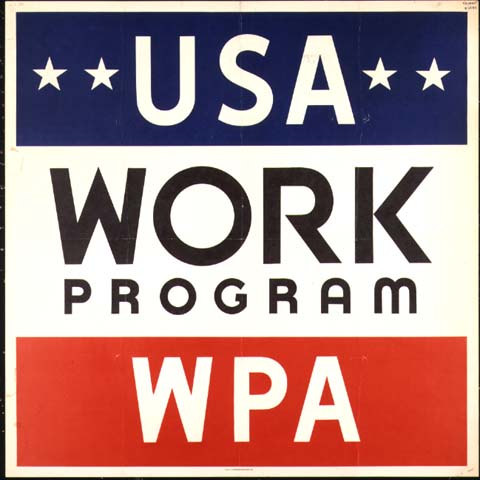
“Waiting for Lefty” was an original play, written and performed during the great depression. There is something quite strange about theater being produced during an economic downfall such as that.  In 1932, Franklin D. Roosevelt made “The New Deal” a popular part of his candidacy that lead to his election. It mainly gave hope to Americans that more jobs would be created. This lead to many federal projects being born like the Federal Theater Project. The federal Theater Project would create jobs for many artists and actors. It was the largest and ambitious effort put forth by the Federal Government to have theater performances in the US. In Franklin D. Roosevelt’s first term he appointed the WPA (Works Progress Administration) to establish four arts-related projects called Federal Theater Project One. This includes the Federal Theater Project (FTP). The FTP lasted for four short years, dating from 1935 to 1939 when its funding was shut down by Congress. By October 1935, 1,000 actors had been given work. This number increased as The FTP got more publicity. Some may wonder why the funding was cut if it created more jobs. Political Controversy between Democrats and Republicans had much if not all to do with this.
            Questions arise when the government funds a project like this. A question that every American thinks about is, how much should the government play in our daily lives? People debate if providing jobs and paying wages are really our government’s role in our society. When a government funded group of Democratic actors and playwrights, perform plays about very left-wing ideas, the question rises, is it propaganda? Does The FTP become propaganda, when the government is paying the bill? Or are these actors and playwrights just doing what they do best- entertain?           
            The role of our Government has been debated over since the constitution was formed. The general consensus is that Republicans did not, and still don’t want the government to be involved in our daily lives and Democrats, the opposite. Republicans might have noted that the government shouldn’t intervene with the creation of jobs, paying wages, etc, which is exactly what happened when the FTP was created. Not only this but the plays that were produced and performed had extremely “left-wing” ideas, such as, “Waiting for Lefty” written by Clifford Odets. This play provoked many democratic ideas of creating civil unions, and standing up to “the man”. This play became widely known and hugely popular throughout the states. So is it propaganda? Some definitions of ‘propaganda’ would suggest that it is propaganda, saying that the plays were wrongly determining the role of the Republican Party paid for by the opposite political party. Others might say absolutely not, the government was not forcing an opinion on anyone. The plays were stories of hard-working Americans, spreading no rumors, or false ideas. Sadly the answer to this question is most likely determined by a personal political party. Our vision is impaired by our own ideas and the media that surrounds us. 


This is a picture from the hit, "Waiting for Lefty" which also made it on Broadway. 


Just a picture from a normal theater in business because of the Federal Theater.


The WPA helped the Federal Theater, when it came down to providing jobs for actors, as well as other artists.

Thursday, November 3, 2011

Blog 20

As one of the two playwrights, I was mainly in charge of writing new scenes as well as editing them to make each scene flow one after the next. For example, during cold reads, Cara and I made changes to the conceptual ideas of our play as well as grammar of each individual line.

Before:
Jose: I think he did
After: Jose thinks he did
This may not seem like a big change at first but, we changed Jose's character, making him talk in the third person. It makes for a more interesting character. It also adds to the absurdity that is our play, making Tyler even more freaked out about his whereabouts and the situation that he is in.

Our original ending was cheesy, ending with an original song by Tyler while all the other characters join along with him. We changed this to Tyler singing his original song but everybody not accepting him, making him the outcast once more. The final scene, rather the final line is based off of Rosencrantz and Guildenstern are Dead, exclaiming, "There must have been a moment in the beginning when I could have said no-but somehow, I missed it. It allows for much more interpretation from the audience.

We also added a scene to add more layers to the play. This scene consists of a drama class, led by Mr. Dri Dri, that the class comes up with a plan to make Tyler learn his lesson. The following scene questions whether they are just acting within the play or being themselves.


Tuesday, November 1, 2011

Blog 19


Arthur Miller's The Crucible, describes some of the best character driven plot that the country has ever seen. In our play, cara and I want and had to create some of the most interesting and weird characters that we could, but also having their personalities drive the plot.


Our job as playwrights was to create a play in a very collaborative process. The creators of South Park make and throw ideas out constantly as they work together to make a great episode each week. We are forced to use our individual talents to work together to create a cohesive and entertaining play.

Steven Colbert has a team of writers behind him. They write constantly, as should us playwrights. If We get enough ideas out the product should be very enjoyable for the audience. Also he uses satire, sarcasm, and many other traits to further illustrate his points about politics.